A Journey Towards Sustainable Water Management
Location: Paradeep, Odisha

Water is life, yet in Mahal Village, Paradeep, it has been a source of struggle. The community grapples with acute water scarcity and iron contamination, affecting daily life and health. However, a transformative water governance and management project is reshaping the narrative, striving for sustainable solutions through community engagement, innovative technologies, and expert guidance.
This initiative, led by Sibani Singh, JSW Foundation Fellow, under the JSW Foundation Fellowship Programme, is being implemented in partnership with Gram Vikas, which provides expert guidance and technical support in shaping sustainable water management solutions.
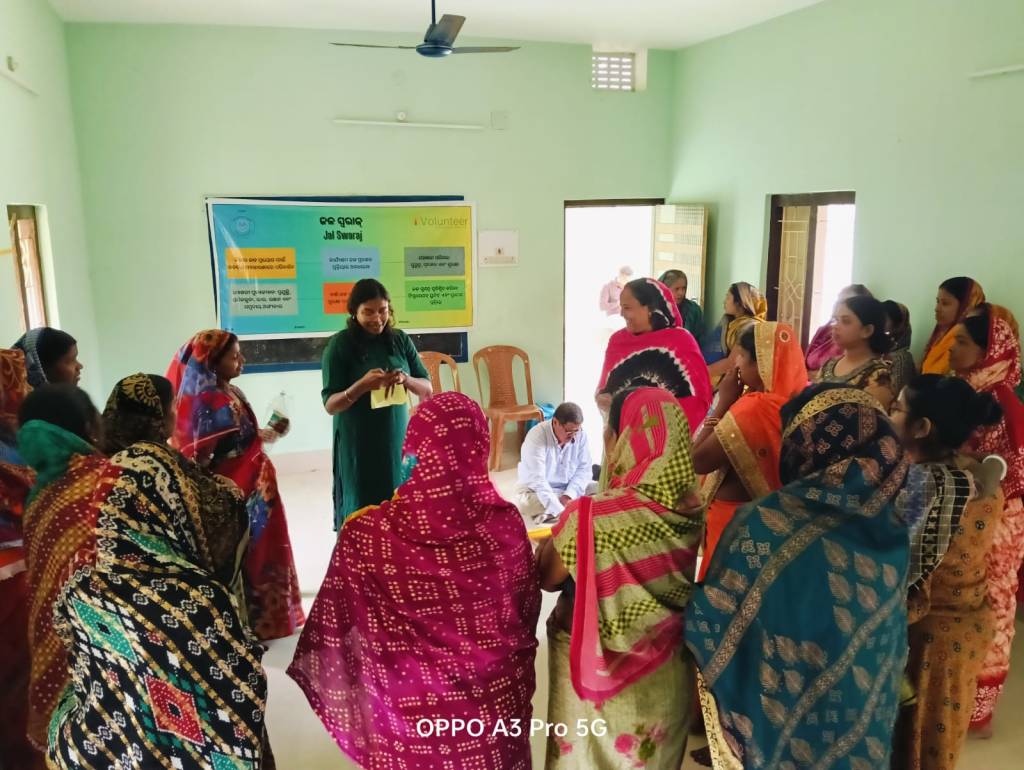
On a significant visit, Mr. Gobinda Dalai (Project Guide) and Mr. Amit Paikray (Water Quality Expert, Gram Vikas) joined our team to assess progress, provide strategic insights, and interact with the villagers. Their expertise and involvement helped pave the way for more robust water management solutions.
Understanding the Ground Realities
The primary objectives of the visit included:
- Evaluating the functionality of existing water sources.
- Exploring solutions to mitigate iron contamination.
- Strengthening community participation in water management.
- Providing technical guidance on sustainable practices.
- Outlining a roadmap for the next phase of implementation.
Observations from the Field
Assessing Water Infrastructure
- Handpumps: Many were functional but supplied water with high iron content, making it unfit for drinking and cooking.
- Ponds: Once valuable resources, they had fallen into neglect but held potential for rainwater harvesting and groundwater recharge.
- Wells: Traditional open wells were mostly abandoned due to contamination concerns.
- Tankers & Barrels: Many families relied on expensive tanker water and purchased barrels, increasing financial burdens.
These observations emphasized the urgent need for water source rejuvenation and affordable filtration systems.
The Voice of the Community

During the visit, an interactive community meeting provided valuable insights:
- Water Scarcity Struggles: Summers bring irregular tanker supply, deepening the crisis.
- Health Impacts of Iron Contamination: Residents reported gastrointestinal issues and skin problems due to contaminated water.
- Willingness to Contribute: The community expressed a strong commitment to supporting the project, whether through labor or financial contributions.
- Expectation of a Permanent Solution: Villagers sought sustainable, cost-effective water treatment options that could be maintained locally.
This engagement reinforced the need for community-led solutions, fostering trust and collective action.
Exploring Innovative Water Treatment Solutions
Potential Technologies Discussed:
- Terafil Filters: A low-cost, clay-based solution for iron removal, suitable for households and community use.
- Iron Removal Plants (IRPs): Larger-scale treatment options to centralize purification.
- Rainwater Harvesting: Emphasized as a supplementary solution to alleviate dependency on groundwater.
Given budget constraints, the focus shifted from achieving complete filtration to making water consumable using cost-effective, community-managed solutions.
Empowering the Community
As the project lead, I stressed the need for long-term community ownership. Key initiatives included:
- Engaging Self-Help Groups (SHGs): Women’s groups were encouraged to maintain filtration systems and conduct awareness campaigns.
- Training Master Trainers: Literate SHG women were identified for advanced water management training to ensure sustainability.
- Awareness Drives: Sessions on water conservation, budgeting, and the health risks of iron contamination were planned.
Youth engagement and school collaboration were also prioritized to instill a culture of water stewardship in the next generation.
Unlocking Government Support and Resources
To maximize impact, we explored various resource mobilization strategies:
- Panchayat Support: Seeking funds for handpump repairs and filtration system installation.
- MGNREGS Convergence: Utilizing employment scheme funds for pond rejuvenation and groundwater recharge.
- State and Central Programs: Tapping into Jal Jeevan Mission and AMRUT initiatives for subsidies and grants.
Aligning with government priorities will help ensure long-term sustainability and funding support.
Key Outcomes & The Path Ahead
What We Achieved:
✔ A clearer understanding of Mahal’s water challenges and opportunities. ✔ A list of actionable recommendations for filtration, source rejuvenation, and community engagement.
✔ A focus on cost-effective, sustainable solutions tailored to local needs. ✔ Increased community involvement and ownership of water management.
✔ A structured roadmap for implementation.
Next Steps:
- Prepare a Detailed Project Proposal
- Outline technical, financial, and operational aspects with cost estimates.
- Pilot Implementation
- Set up a Terafil filter system as a model project.
- Kickstart rainwater harvesting initiatives.
- Community Capacity Building
- Conduct training sessions for SHG members and master trainers.
- Launch awareness campaigns on water safety and conservation.
- Strengthen Partnerships
- Collaborate with government bodies, NGOs, and water technology experts.
- Seek technical assistance from Gram Vikas and WOTR.
- Monitor & Evaluate Progress
- Establish a tracking system to assess impact and address challenges proactively.
Conclusion: A Step Towards Water Security
The visit of Mr. Gobinda Dalai and Mr. Amit Paikray marked a pivotal moment in Mahal Village’s journey toward water security. Their guidance and community engagement laid the foundation for meaningful change.
Sustainable water management requires a holistic approach, combining technology, community ownership, and policy alignment. By executing our roadmap and sustaining momentum, Mahal Village can transform its water landscape, becoming a beacon of success for other rural communities facing similar challenges.
Together, we are moving towards a future where safe, accessible water is not a privilege but a reality for all.