

By Anusha Murali
Every day, Indian households generate massive amounts of waste, from leftover food and vegetable peels to plastic wrappers and broken items. Sadly, much of this ends up in overflowing landfills, rivers, and roadsides, causing trouble to the waste handlers and the municipalities. But the solution begins at home, with just two bins and a little awareness, we can make a big difference.
Waste segregation, the simple act of separating different kinds of waste, is one of the most powerful tools we have to manage this crisis. It ensures that recyclable materials don’t get contaminated, that compostable waste can nourish the soil, and that harmful items are safely disposed of. This makes the job of waste handlers easier and ensures a smooth composting and recycling process.
Let’s simplify it: if you’re wondering where to begin, start with the 2-bin system recommended for Indian homes.
Why Segregate Waste?
When all waste is thrown together, it becomes dirty, smelly, and unusable. It also puts sanitation workers at risk and increases the burden on already strained municipal systems. But when we segregate:
- Wet waste can be composted.
- Dry waste can be recycled.
- Hazardous or rejected waste can be safely disposed of.
Segregation is the first step toward a cleaner home, safer environment, and healthier community.
The 2-Bin System: Simple and Effective
Unlike complex sorting methods, the 2-bin system is easy to follow for every Indian household.
1. Green Bin – Wet Waste (Biodegradable)
This bin is for all organic, compostable waste such as:
- Vegetable and fruit peels
- Leftover food (non-oily)
- Tea leaves, coffee grounds
- Eggshells, bones, fish scales
- Flowers, leaves, and small garden waste
What to do with it:
- If you have a garden or even a balcony, try composting at home. Small compost bins are now easily available online.
- If you can’t compost, hand it over to the municipality if they have a separate wet waste collection system. Even if they don’t, you do your part and hand over segregated waste.
Tips:
- Do not put liquids like dal directly into the bin, instead, run it under water in the sink, and strain it through a strainer or a sink hole strainer. You can later put the strained waste into the wet waste bin.
- To handle waste like used tea leaves, wash it under water so that the sweetness is washed off, let the excess water drain and then put this into the wet waste bin. This ensures less smell and does not attract flies.
- Empty it daily to avoid smell or flies.
2. Blue Bin – Dry Waste (Recyclable)
This includes all non-biodegradable items like:
- Paper (newspapers, books, cardboard)
- Plastics (packaging, bottles, containers)
- Metals (foil, cans, wires)
- Glass (jars, bottles)
- Fabric scraps, footwear, toys
Important:
- Ensure all items are clean and dry.
- Flatten cartons and bottles to save space.
- Store this waste for 3-4 days before handing it over to recyclers or kabadiwalas.
- Waste like packets of milk, food containers should be first washed with water, dried and then put in the dry waste bin. This helps to avoid the foul smell and makes recycling easier for the waste handlers.
But What About Sanitary Pads, Diapers, and Broken Glass?
These items don’t fall neatly into wet or dry waste categories. They’re known as “reject waste” — non-recyclable, potentially hazardous waste that needs careful handling. Such waste is mostly incinerated in machines.
While the two-bin system is sufficient for daily segregation, reject waste should be separately packed and clearly marked before disposal. Here’s how to handle them safely:
Sanitary Napkins and Diapers
- Wrap used sanitary pads and diapers in old newspaper or paper bags.
- Mark the packet with a red dot (as per government guidelines).
- Do not throw them loose into the bin — this protects sanitation workers from direct contact.
Broken Glass and Sharp Objects
- Collect broken glass, razor blades, or needles in a rigid box or wrap them in layers of newspaper.
- If possible, tape the packet securely and write “Sharp Waste” on the outside.
- Never dump these loose — they can injure waste handlers.
Expired Medicines, Batteries, and E-Waste
- Store separately in a labelled container.
- Drop off at your nearest pharmacy, municipal e-waste collection point, or schedule pickup if your city offers the service.
Pro Tip: Have a small “reject waste” pouch or box at home and empty it once a week properly.
Tips to Make Waste Segregation a Habit
- Start Small: Place two labelled bins in your kitchen — one green, one blue. Keep a small pouch or box for reject waste.
- Store Old News Paper to dispose reject Waste: Store old newspapers and cardboard boxes to store and dispose reject waste
- Educate Family and House Help: Explain what goes where. Use printed charts in local language if needed.
- Compost Your Kitchen Waste: A small compost bin can fit in a balcony or utility area. Look up sites that provide information on composting at home.
- Connect with Local Recyclers: Many NGOs and startups collect dry waste regularly from homes.
- Be Consistent: Segregation takes seconds a day but creates a long-lasting impact.

Common Concerns and Real Talk
- “What’s the point if it all goes into the same garbage truck?”
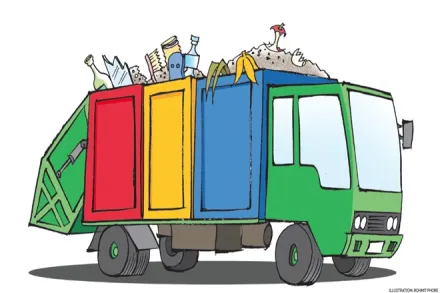
Many municipalities now have separate compartments or pickup days for wet and dry waste. But even if it doesn’t happen consistently yet, citizen segregation puts pressure on the system to improve and it allows informal waste workers to sort and recycle clean, uncontaminated material. Only if we do our part right is when we can point fingers at others.
- “I live in a rented flat / small house — can I still compost?”
Absolutely. Even a 15-litre compost bin can process your kitchen waste. And you get free compost for your plants!
Conclusion: It Starts With Us
Clean India is not just a government slogan, it’s a shared responsibility. Segregating waste is not about being “eco-friendly” once a year. It’s about respecting our environment, our fellow citizens, and the future.
So start today. Get your two bins ready, explain it to your household, and make it a routine. Waste segregation at home isn’t complicated, it’s just not been made a habit yet. Let’s change that, one bin at a time!